
Specialist clinical care

Community Nursing Care

Community nursing brings clinical care to you instead of sending you out to find it. Our registered nurses assess, plan and deliver nursing care in your home or in the community, and stay involved as your needs change — so a wound, a catheter or a medication routine never becomes the reason you end up back in hospital.

How it's funded

Usually funded from Core Supports, or from Capacity Building – Improved Daily Living where a nursing assessment or care plan is required.

NDIS category

Registration group 0114 — Community Nursing Care

What's included
What community nursing covers

  • Nursing assessments and written care plans
  • Wound care, dressings and pressure injury management
  • Medication management, administration and Webster-pak support
  • Urinary catheter care, changes and bladder management
  • Subcutaneous and intramuscular injections
  • Diabetes management, including insulin and blood glucose monitoring
  • Stoma and bowel care
  • Clinical monitoring, escalation and GP or specialist liaison
  • Delegation, training and competency sign-off for your support workers
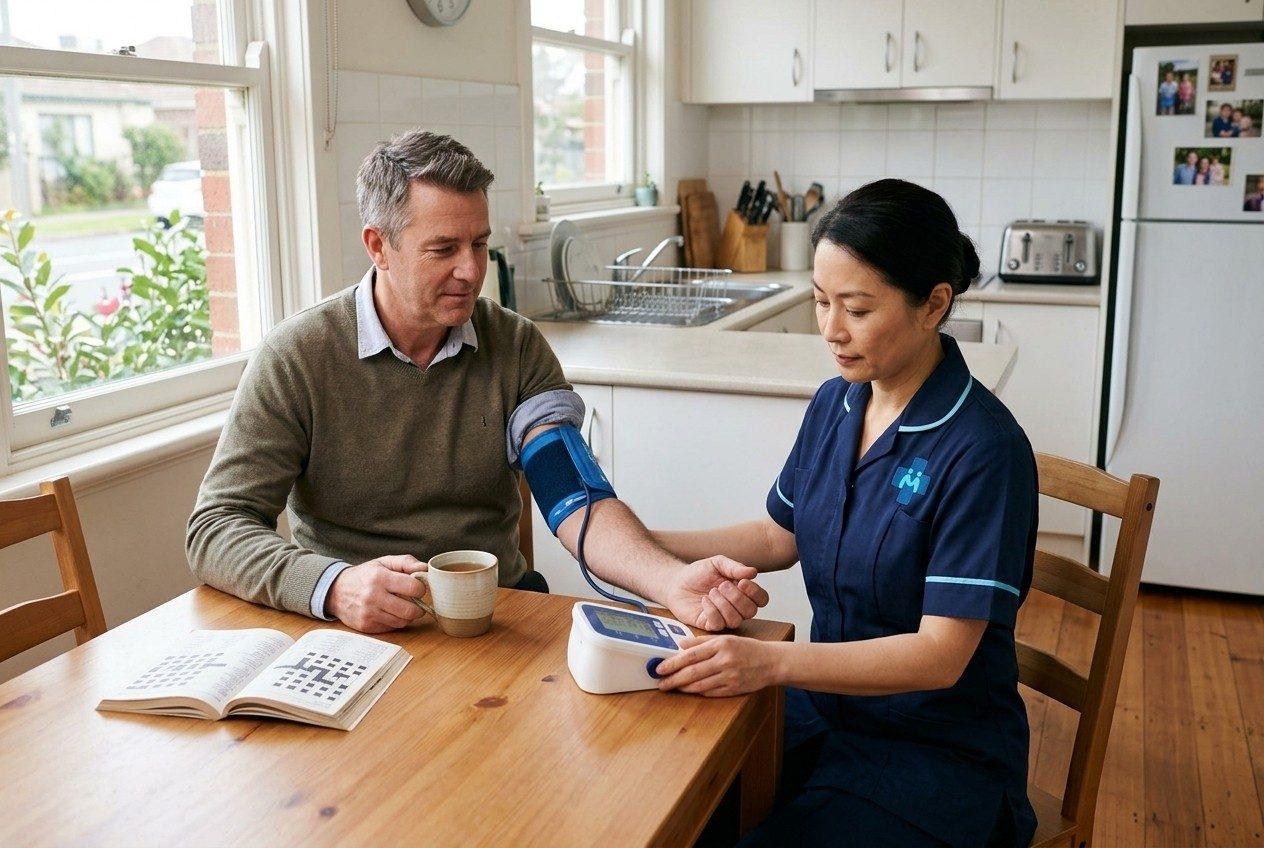
A nurse taking a man's blood pressure at his kitchen table during a home visit

Who this is for

  • Participants with a health condition that needs regular clinical attention
  • People whose care is currently being managed in a clinic or hospital that could safely happen at home
  • Support coordinators seeking a nurse to write or review a care plan
  • Households where support workers need clinical training and supervision to deliver a nursing task safely

How we work

Our clinical process

No mystery, no drawn-out intake. You know what happens at each stage and who is responsible for it.

  1. 1

    Clinical assessment

    A registered nurse meets you at home, reviews your health history and current supports, and identifies the clinical risks that matter most.

  2. 2

    Care plan

    We write a nursing care plan in plain language, agree it with you, and share it with the people you want involved — your GP, specialists, family or support coordinator.

  3. 3

    Delivery

    Nursing visits run to an agreed schedule with a small, consistent team, so you are not re-explaining your care to a stranger each week.

  4. 4

    Review and escalation

    We review the plan at set intervals and whenever something changes, and escalate to your treating team early rather than late.

Safeguards

How we keep this safe

Clinical supports carry real risk. These are the controls that sit behind the care, and we are happy to walk any of them through with you or your support coordinator.

  • Nurses hold current registration with the Nursing and Midwifery Board of Australia (AHPRA)
  • Clinical care is governed by a nurse-led clinical governance framework, with documented supervision and escalation pathways
  • Where nursing tasks are delegated to support workers, delegation is documented and competency is assessed by a registered nurse

Related supports

Often needed alongside this

High Intensity & Complex Care

High intensity daily personal activities delivered by trained, nurse-supervised workers — the supports many providers decline.

Community nursing

Need community nursing in Melbourne?

Send a referral or call us and we will tell you honestly whether we can help and how quickly. We respond within one business day.

Or email admin@expert2care.org